
Yes, and here is how a car key made without original copies works
You know how frustrating it is when you lose your last remaining key, especially since the common myth says you always need an original to make a copy.
We constantly hear that same worried question from drivers, but the truth is that getting a car key made without original copies is entirely possible for almost every modern vehicle in Malaysia. Take a deep breath if you are currently stranded.
The specialized diagnostic tools available in 2026 make the process much faster than you might expect. Our mobile technicians perform this exact car key replacement service every week across the Petaling Jaya area.
Let’s look at the data, the specific tools involved, and the practical steps to get your engine started again.
How a key is made without an original
Route 1: Decode the lock
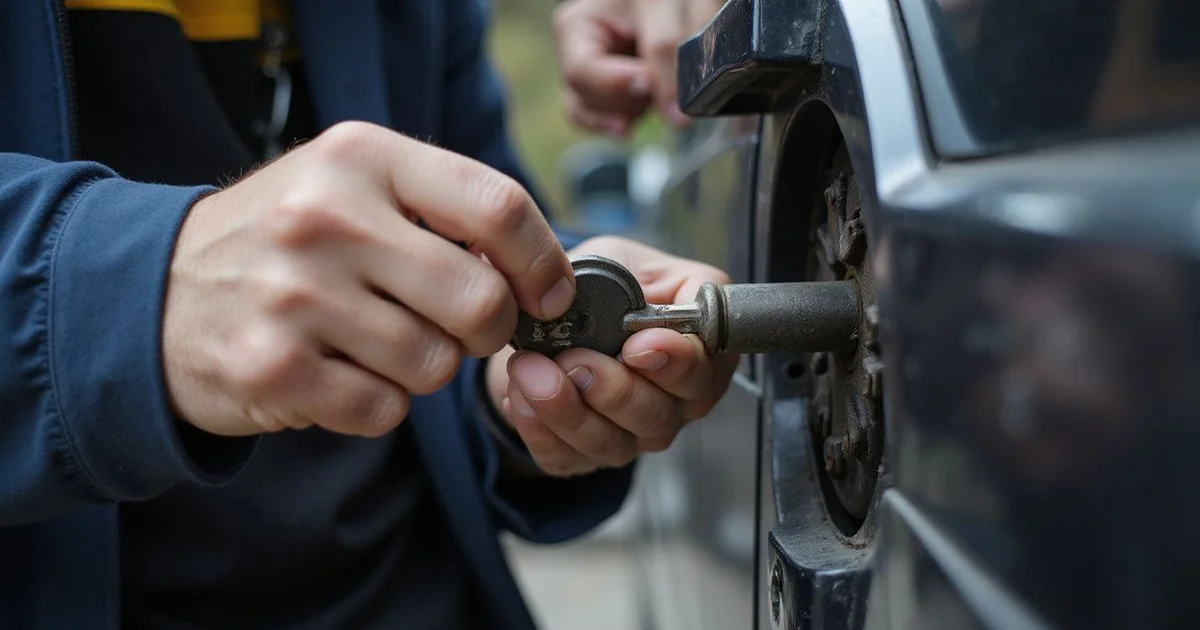
The metal portion of your car key is cut to a specific bitting pattern that matches the wafers inside your door lock.
We use precision tools like the Lishi 2-in-1 lock decoder to handle this step safely. This specific device allows a technician to read the exact depths of the lock cylinder without removing the door panel.
It completely prevents the scratched paint or broken internal clips that often happen with amateur entry attempts. Our standard procedure follows a few precise steps to recreate your physical blade:
- Insert a thin Lishi decoder tool into the driver’s side door lock.
- Read the pin positions and wafer depths one by one.
- Reconstruct the original bitting pattern into a digital code.
- Cut a fresh blade matching that exact pattern using an automated milling machine.
This decoding process is entirely non-destructive. Your door lock remains completely intact and functional.
We find that the physical reading phase only takes a few minutes for an experienced professional. A common mistake is assuming this newly cut metal blade will automatically start the engine.
Modern security systems require an electronic handshake before the ignition will turn over.
Route 2: Pull the key code from the car
We tackle the electronic side of the job next for supported models. Newer cars store the key code, or the bitting pattern, directly inside the vehicle’s electronic control modules. This data retrieval skips the manual door decoding entirely.
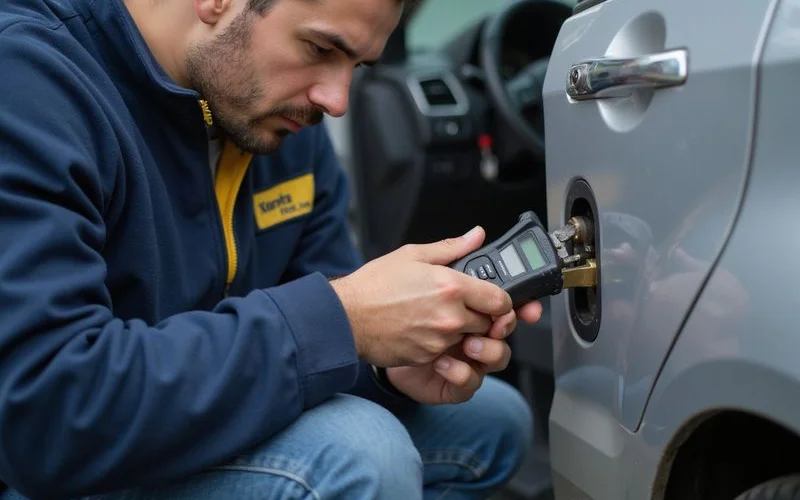
Our technicians plug an advanced diagnostic scanner, such as the Autel MaxiIM IM508S, directly into your car’s OBD-II port.
This professional-grade tool reads the encrypted key code stored in the vehicle memory. The streamlined digital process looks like this:
- Connect the Autel scanner to the OBD-II port under the dashboard.
- Communicate with the Engine Control Unit (ECU) to retrieve the digital cut code.
- Send that digital code to an automated key cutting machine to mill the fresh blade.
We find this method exceptionally fast for modern Malaysian cars, like recent Perodua or Honda models.
A critical insider tip is to ensure your car battery is healthy before starting this process. A sudden voltage drop during an ECU read can corrupt the vehicle’s immobilizer data.
Our mobile units always hook up a battery maintainer to prevent any power loss. For deeper background on what is happening, see our guide on how car transponder key programming works.
Then: the chip programming
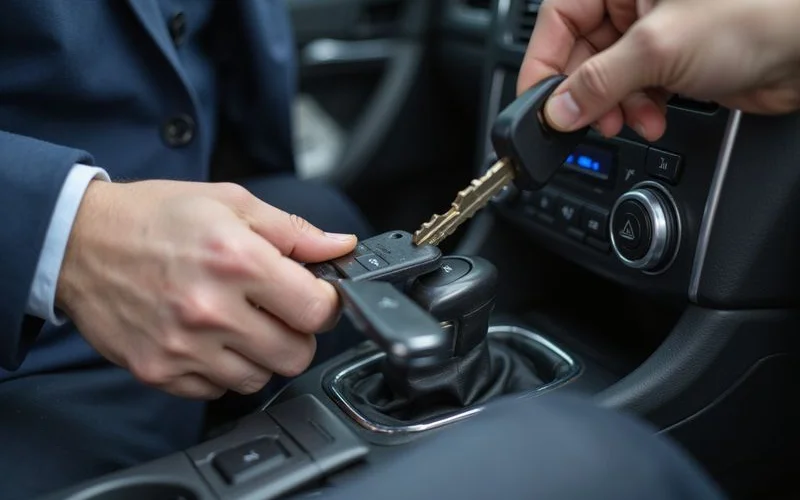
The metal blade gets you inside the cabin, but the transponder chip programming is what actually starts the engine. We must pair the tiny microchip inside the new key directly to your car’s immobilizer system.
Having no spare means the vehicle must be placed into a secure learn mode. The system will then write the new chip as the primary authorized key.
Our diagnostic tools communicate through the OBD-II port for most 2026 vehicles, though older models might require a direct EEPROM (Electrically Erasable Programmable Read-Only Memory) read.
A crucial security step during an all keys lost car scenario is wiping the old keys from the system. This deletion ensures that whoever finds your missing key cannot drive away with your vehicle.
We perform this exact same high-level programming on-site, right where you are parked.
Dealerships typically require you to tow the car to their service center for this step. The towing fees alone add unnecessary expenses, and dealership coding can sometimes push the total bill well over RM 1,000 depending on the brand.
Our mobile service eliminates the tow truck entirely and gets the coding done in one visit.
What we need from you
Providing the correct documentation is the crucial first step before any tools come out of the van. The Road Transport Act guidelines require professionals to confirm legitimate ownership before bypassing any vehicle security system.
We strictly follow these verification protocols to protect your asset from unauthorized access or potential theft. For an all keys lost car situation, you must provide:
- Proof of vehicle ownership: The official Vehicle Ownership Certificate (VOC), commonly known as the geran, is required.
- Digital Options: The digital VOC accessed through the MyJPJ app is perfectly acceptable if you misplaced the physical paper.
- Your ID: A valid Malaysian IC or driving licence must match the name on the vehicle registration.
- Corporate Authorization: Leased or company cars require a formal letter of authorization on company letterhead.
- Vehicle Specifics: The exact make, model, and year tell us which specific transponder blanks to bring.
- The VIN: The 17-character Vehicle Identification Number, usually visible at the base of the windscreen, helps us pull factory codes.
These requirements are not just pointless bureaucracy. A missing VOC or a mismatched ID is a massive red flag in the security industry.
We refuse service if ownership cannot be proven, guaranteeing that only the true owner receives a working key.
What it takes time-wise
Knowing how long you will be waiting is vital when you are locked out because of a car key with no spare. Towing a car to a dealership and waiting in their service queue can easily leave you without a vehicle for three to five business days.
We complete the entire replacement process on-site in a fraction of that time.
| Step | Typical time |
|---|---|
| Arrive on site | 30 to 60 min from your message |
| Verify ownership | 5 min |
| Decode or retrieve cut | 15 to 30 min |
| Cut blade | 10 min |
| Programme transponder | 15 to 45 min |
| Test all functions | 10 min |
The total turnaround time is usually 60 to 120 minutes from your initial message to a running engine. Simple mechanical keys fall on the faster end of that spectrum, while complex proximity smart fobs take a bit longer to program.
We always warn clients that heavy rain can slightly delay the manual lock decoding step, as it requires precise tactile feedback outdoors. Finding a dry, safe spot to work ensures the equipment functions perfectly.
When dealer-only is the honest answer
A small percentage of vehicles on the road utilize closed-loop security protocols that independent equipment cannot bypass. We immediately redirect you to the official dealership if your car features something like the Mercedes-Benz FBS4 immobilizer system.
Attempting to force an aftermarket tool into a locked-down European ECU can permanently brick the computer module.
Only about 5 percent of the cars encountered in Petaling Jaya require this dealer-only route. We prefer to be completely honest upfront to save your time and protect your vehicle.
For a detailed breakdown of realistic price ranges, review our car key replacement cost in Selangor guide. To compare the two service options directly, read our breakdown on car key replacement: locksmith vs dealership.
Our team is ready to review your exact situation today. Send a WhatsApp message with the specific make, model, year, and current location to find out if getting your car key made without original copies is possible on-site. A clear, upfront quote will be provided before a technician ever leaves the workshop.